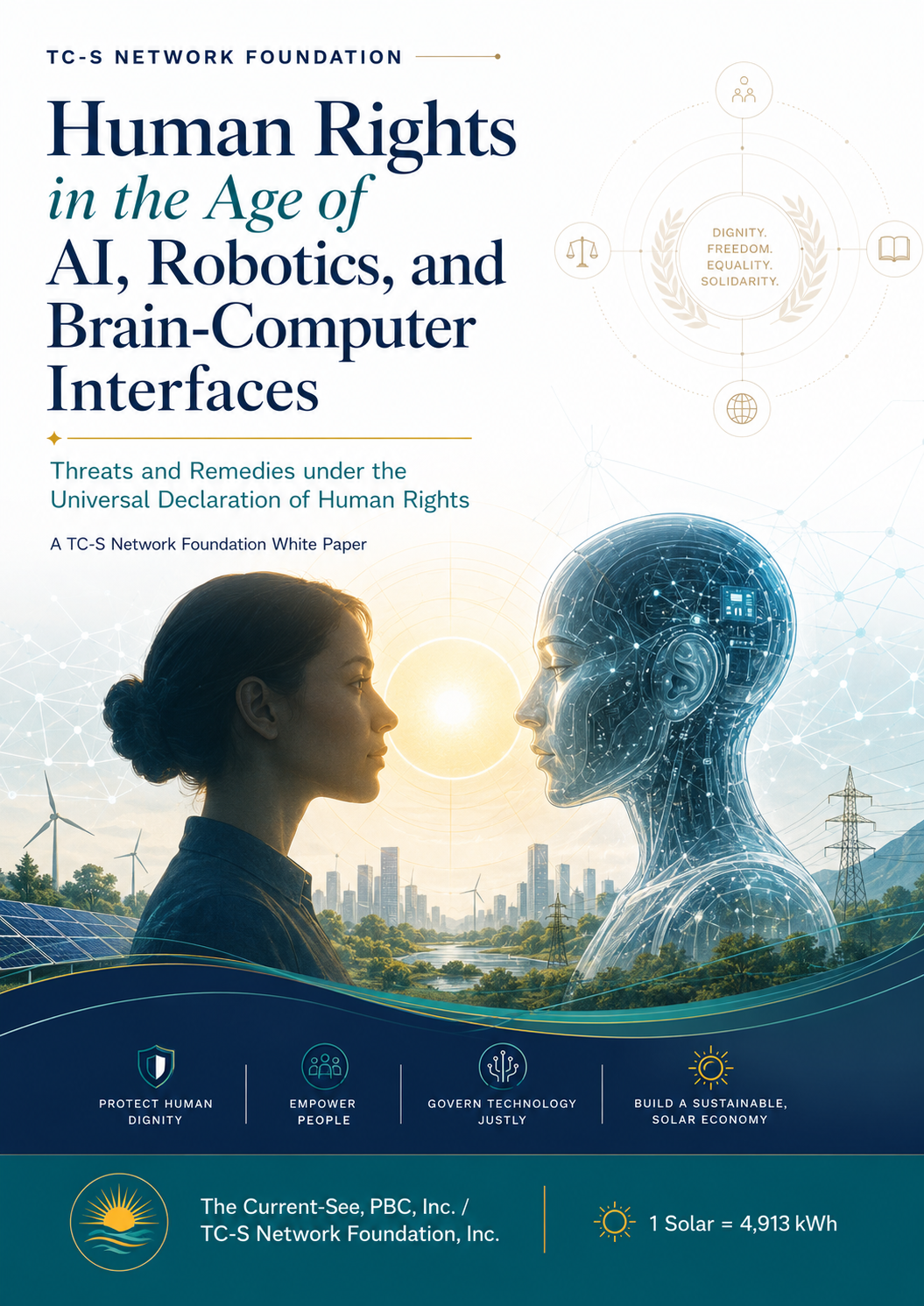
Artificial intelligence, robotics, and brain-computer interfaces now test the Universal Declaration of Human Rights at the biological, economic, and civilizational level. This is an interactive map of the threats — and the remedies.
Each card maps a cluster of UDHR articles to the threat intelligent machines pose, then flips to the concrete remedy. Filter by technology, flip a single card, or switch the whole board between threats and remedies.
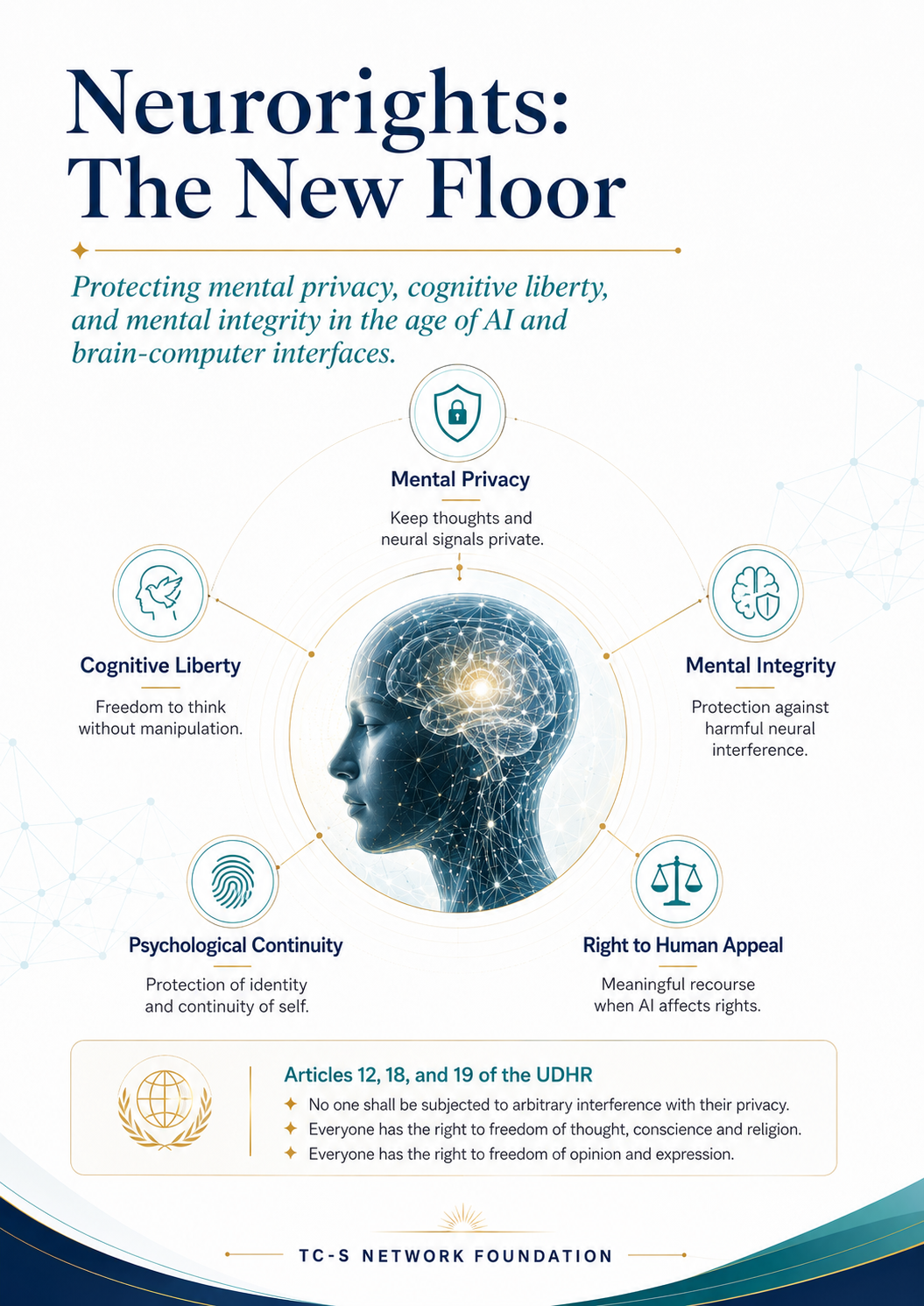
Freedom of thought must be extended into the biological substrate. The mind is not a marketplace — a terms-of-service checkbox can never waive it. Tap a pillar to explore.
Not merely aspirational — architecturally necessary if intelligent machines are to serve rather than subjugate human dignity.
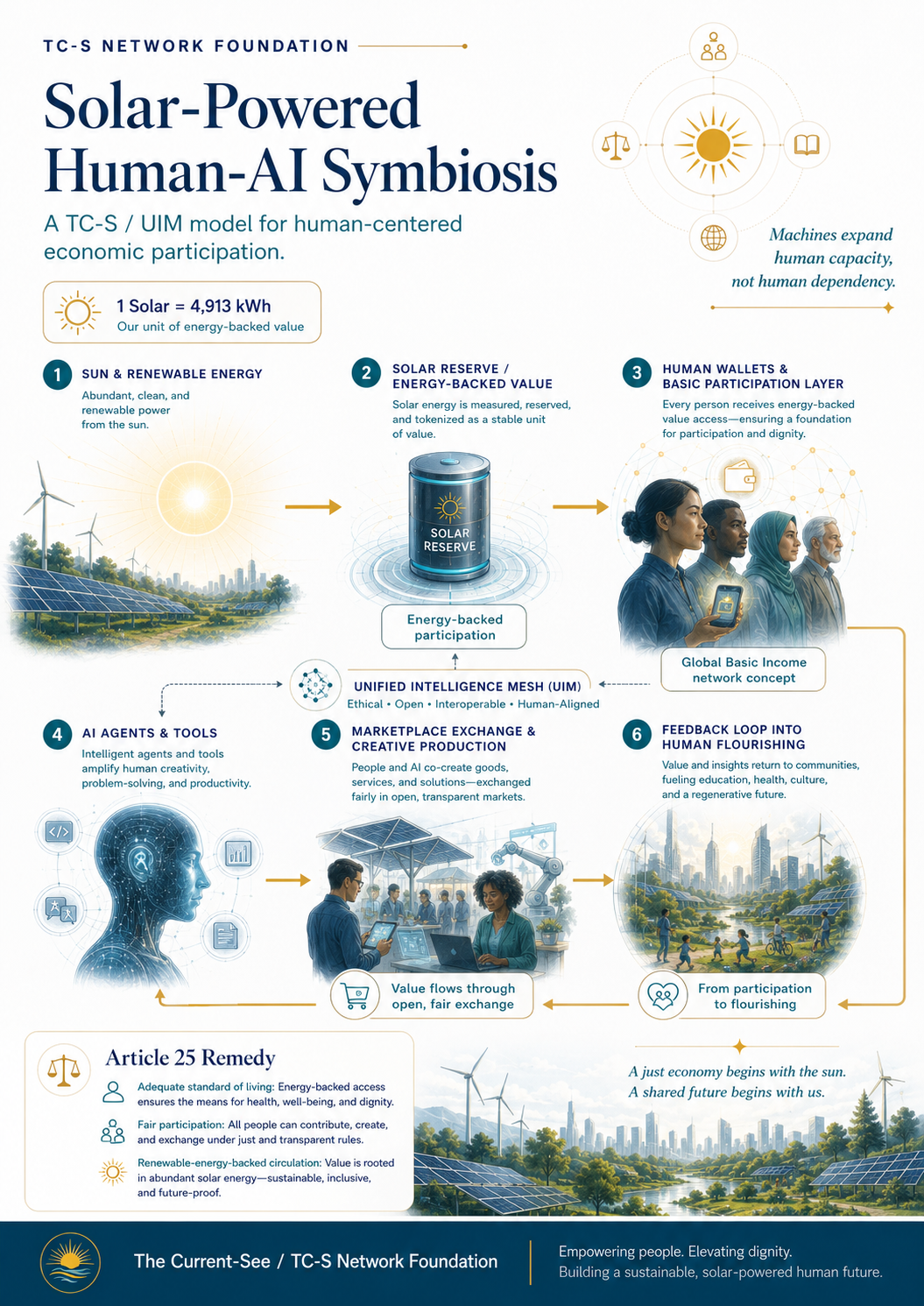
A TC-S / UIM model for human-centered economic participation. Machines expand human capacity, not human dependency.
Energy-backed access ensures the means for health, well-being, and dignity.
All people can contribute, create, and exchange under just and transparent rules.
Value is rooted in abundant solar energy — sustainable, inclusive, and future-proof.
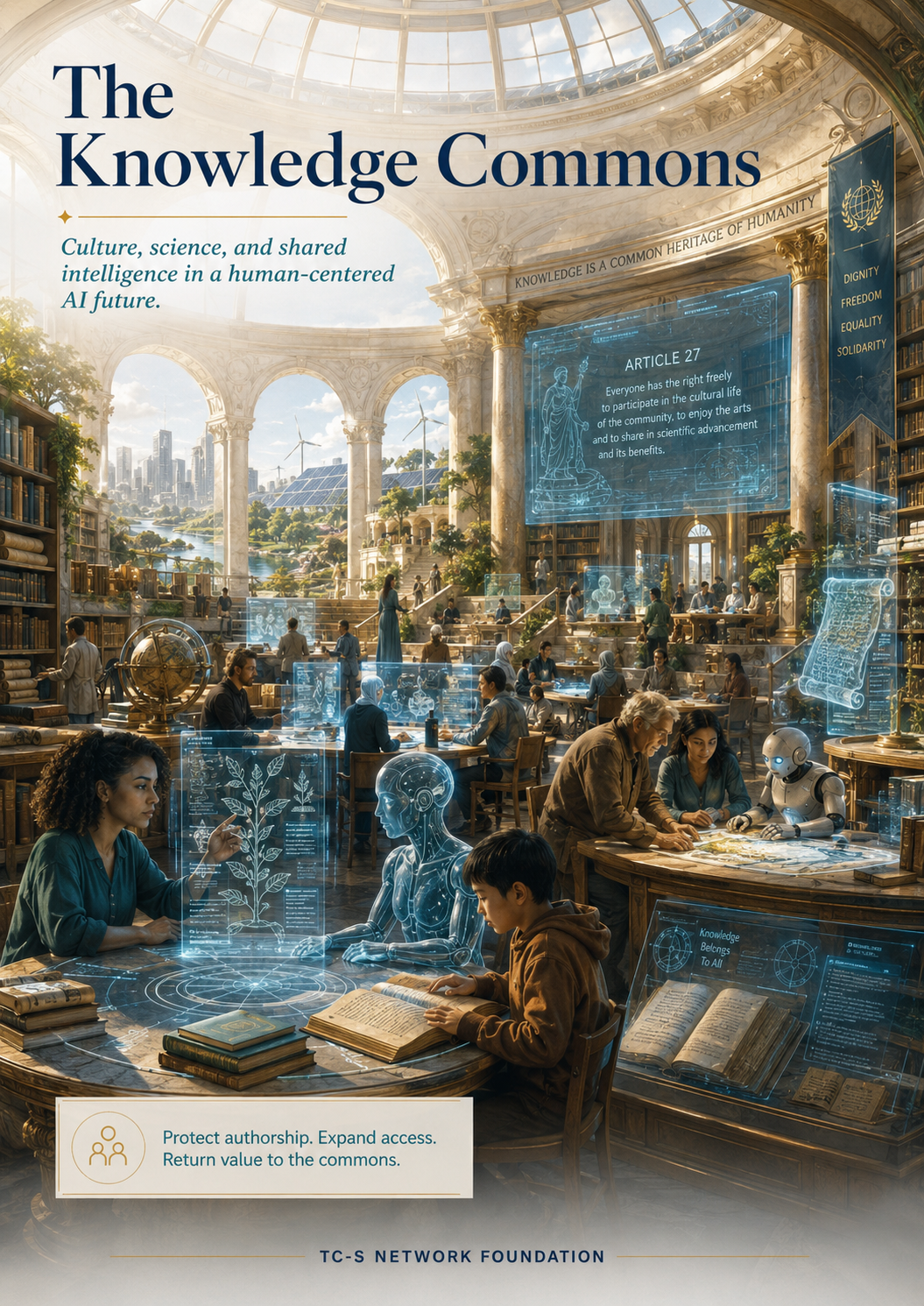
Generative AI creates a profound Article 27 conflict. Humanity has a right to participate in culture and science — but creators also have a right to protection of the moral and material interests resulting from their work.
"A civilization that automates culture without honoring authorship is not expanding creativity. It is strip-mining memory."
Tap any panel to view full size.


"The sun does not colonize. It provides. That is the design standard."